

Traceability & Certificates
Documentation & Proof for Secure IT Disposal
How asset tracking, operational records and certificates create audit-ready proof of secure destruction and data erasure
In secure end-of-life IT operations, execution matters— but so does the ability to document what happened.
Traceability transforms an operational service into a defensible, reviewable and auditable process.
Why traceability matters
Traceability closes the gap between:
“We did the work” and “We can prove how the work was carried out.”
Without traceability, even a correctly performed operation is harder to evidence. With structured records, organisations are better positioned to document decisions, demonstrate control and respond to audit inquiries or governance reviews.
-
Governance & Accountability
Boards and internal stakeholders expect clear records of how sensitive assets were handled. Traceability demonstrates decision-making discipline and reduces reputational risk if asset handling is questioned later.
-
Compliance Confidence
Data protection frameworks such as GDPR and nLPD place strong emphasis on accountability and documentation. Traceability helps create the evidence required for internal reviews and regulatory inquiries.
-
Operational Clarity
For IT and procurement teams managing large-scale asset refresh or decommissioning projects, traceability ensures visibility: what assets were involved, what treatment was applied, what certificates were generated, and when each phase was completed.
-
Dispute Prevention
Clear documentation reduces uncertainty with internal stakeholders, clients and auditors. If questions arise months or years after treatment, structured records provide defensible answers.
-
Continuous Improvement
Traceability data also helps identify operational patterns, treatment volumes, timing and recurring issues — supporting continuous improvement.
What traceability includes in practice
Traceability is not a single document or system. It is a layered approach to documentation that captures asset handling across the entire lifecycle.
-
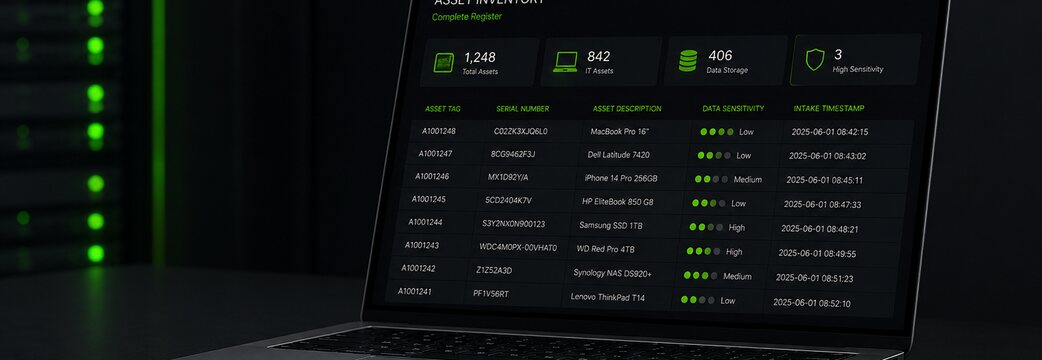
Inventory Data
Complete asset register with serial numbers, asset descriptions, data sensitivity assessments, and intake timestamps. This inventory is the foundation for all downstream operations.
-
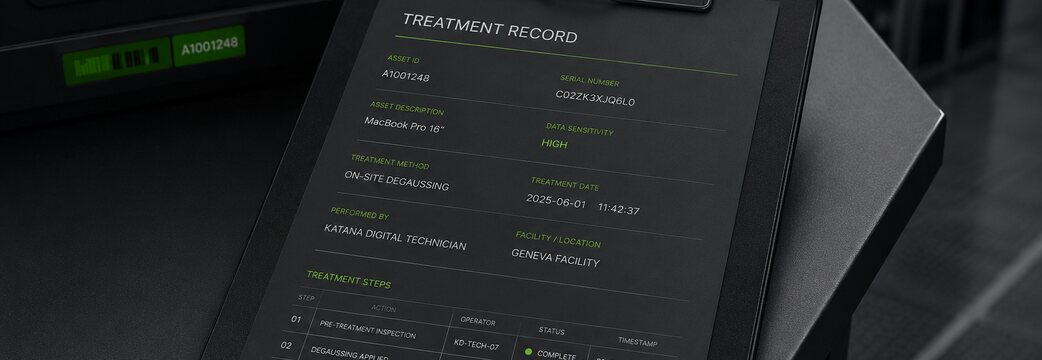
Treatment Records
Documentation of which treatment method was applied, the date treatment occurred, which personnel performed the operation and which facility. Treatment records connect specific assets to specific interventions.
-

Intervention Observations
Pre-treatment findings (asset condition, data presence) and post-treatment observations (destruction confirmation, erasure verification). For on-site operations, includes witness observations.
-
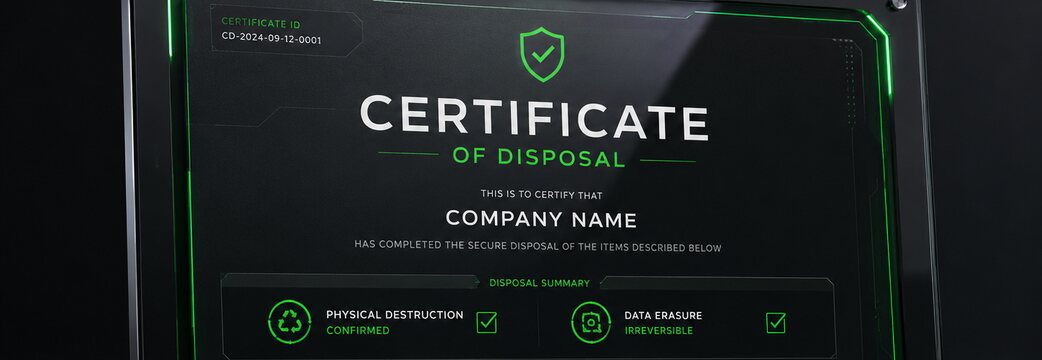
Certificates of Disposal
Formal documents attesting that treatment occurred. Destruction certificates confirm physical destruction to a specified security class. Erasure certificates confirm irreversible data removal.
-
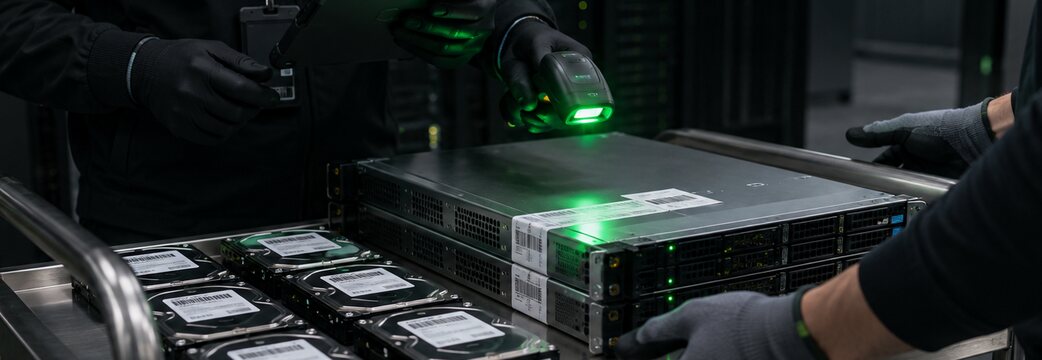
Chain of Custody Records
Documentation of asset movement and responsibility. Who received assets? When? Under what conditions? Who released them for treatment? For on-site destruction, this chain is maintained within your premises.
-
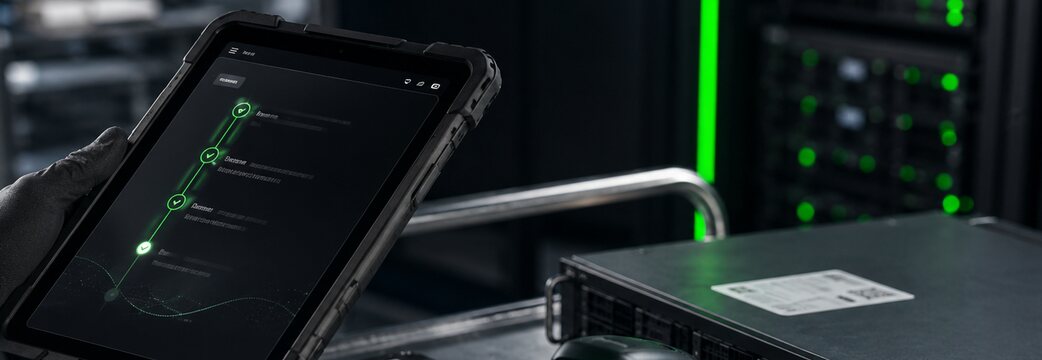
Operational Traceability
Timestamps and system records showing when each operational step was completed. Asset entered at 09:45, treatment at 14:30, certificate issued at 15:00. This temporal record demonstrates operational flow.
The 5-Step Traceability Flow
Intake → Inventory → Treatment → Certificate → Audit Ready
How Katana digital supports traceability
Katana Digital has developed a proprietary inventory and destruction tracking system designed to support structured, audit-ready asset handling.
-
Inventory Management System
Assets are registered within the Katana system and linked to relevant identifiers such as serial numbers or asset tags. Serial number reconciliation supports accurate final reporting.
-
Asset-Level Tracking
Every asset can be followed from intake through final disposition. The system records: intake date, assigned treatment method, actual treatment date, certificate generation, and final disposition outcome.
-
On-Site Intervention Documentation
Operational information is recorded during the intervention to maintain a direct connection between the treatment performed and the supporting documentation.
-
Real-Time Reporting
Data entered during on-site operations is recorded directly into the system, eliminating post-operation data entry delays. Supervisors can verify asset treatment as it occurs.
-
Secure Certificate Generation
Certificates are generated from recorded treatment information and can include relevant asset and intervention details depending on project scope.
Katana's Proprietary Tracking Architecture
Assets → System → Reports → Audit Documentation

Certificates in context
Certificates are one part of the broader documentation framework. They help formalise the outcome of a treatment operation, but they are most meaningful when supported by consistent underlying records and demonstrated operational controls.
Types of Certificates in Practice
Destruction Certificates
For on-site shredding operations compliant with ISO 21964. Include asset identifier, shredder model, security class achieved, cut size, date/time and operator name.
Data Erasure Certificates
For certified data removal operations compliant with NIST SP 800-88. Include asset identifier, erasure method applied, completion verification method and certification level.
Final Disposition Certificates
Confirm what happened to physical material (recycled, landfill), recovered assets (resold, returned) and residual components.
- What Certificates Prove A destruction certificate confirms that equipment was physically shredded to a specified security class. An erasure certificate confirms that data storage media was processed through a certified, auditable data destruction method. A final disposition certificate confirms what happened to material remnants and recovered assets. These certificates represent the outcome of treatment—proof that a defined process was carried out.
- What Certificates Do Not Replace Certificates alone do not constitute complete traceability. A certificate without supporting asset records, treatment documentation or chain of custody evidence is incomplete. The most valuable certificates are those embedded in a broader documented operational record that explains how the asset arrived, what treatment was applied, who performed it, and what happened afterward.
The Three Pillars of Comprehensive Traceability
Documentation | Process | Governance → Comprehensive Traceability & Accountability
Frequently asked questions
-
Traceability generally includes inventory or asset-level information, treatment records and intervention reporting, depending on the project scope. The objective is to create a documented chain that supports clarity and internal review.
-
Certificates identify the assets treated, the method applied (destruction to a security class or certified erasure), the date and time, the operator and the location. They are time-stamped and digitally signed.
-
Both. Documents only carry weight when they reflect a controlled process: assets registered at intake, handled under chain of custody and treated as recorded. The paperwork is the evidence of that process.
-
Reporting can go down to asset level, with serial numbers, treatment method and certificate for each device, and be consolidated per site, per project or per period for recurring programmes.
Next steps

Explore related compliance frameworks:
- ISO 21964 & DIN 66399 Destruction Standards (certified methods underlying certificates)
- Security & Chain of Custody Operational Controls (secure handling that supports traceability)
- GDPR & nLPD Data Protection (regulatory requirements for documentation and accountability)
- Our Certifications Trust Signals (ISO 9001 quality, NIST SP 800-88, IEEE 2883)

Or reach out to our team: