
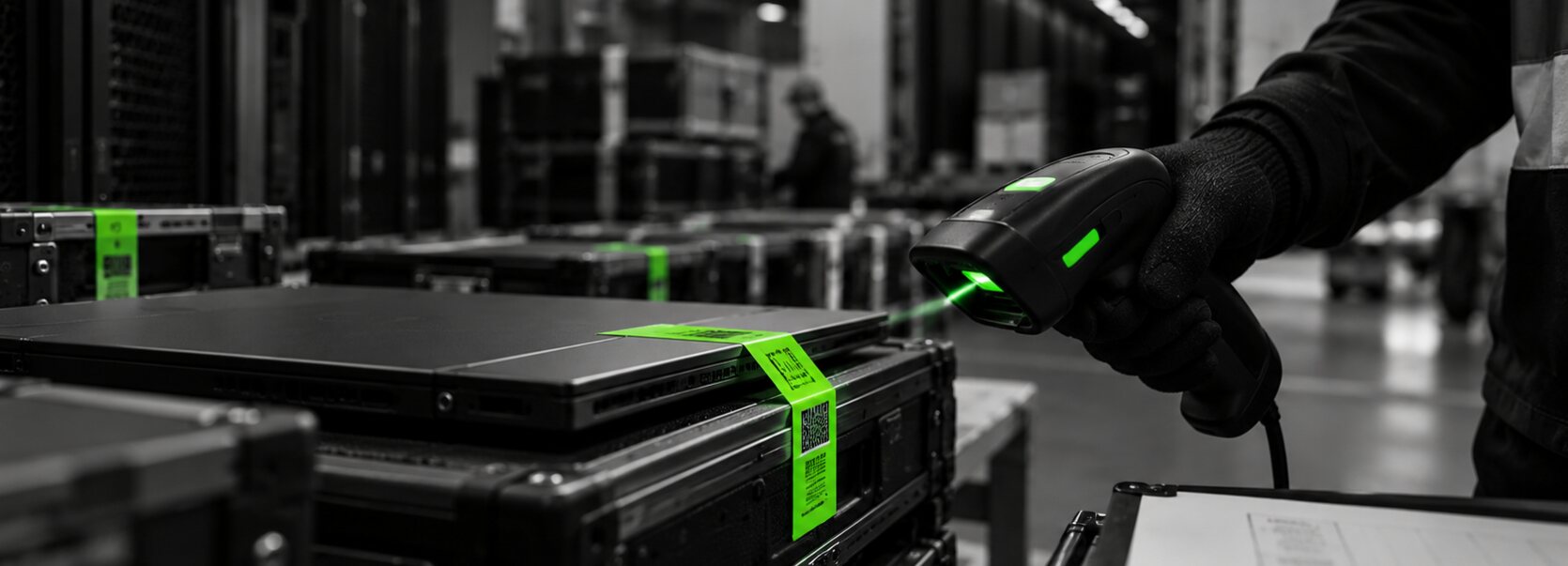
Security & Chain of Custody
Operational Controls for Secure End-of-Life IT
How controlled handling, documentation and accountability protect sensitive assets from collection through final treatment
In end-of-life IT operations, security depends not only on the final treatment method.
It also depends on how assets are collected, identified, transferred, staged and documented throughout the operational chain. This is the essence of chain of custody: maintaining clear accountability at each relevant handover.
Why chain of custody matters
When retired equipment still contains confidential, personal or strategic information, every handoff and every transfer creates potential exposure. Weak security controls during collection, staging, transport or processing can fundamentally undermine the security value of the final treatment method.
-
Asset Exposure During Collection & Staging
Data-bearing assets awaiting treatment represent concentrated risk. Controlled collection and staging procedures ensure that sensitive assets move into formal processes with clear responsibility and documented transitions.
-
Transport Risk
Moving untreated equipment containing confidential data introduces transport exposure. Minimising transport—or, when necessary, securing it with documented protocols—reduces this exposure.
-
Treatment Verification
Documentation should also cover the treatment itself. Who performed the treatment? When? Under what conditions? What was the outcome?
-
Regulatory Accountability
Chain-of-custody documentation supports the accountability and record-keeping requirements associated with data protection and governance frameworks.
-
Operational Visibility
Clear records show which assets have been collected, which are awaiting treatment and which have been completed.
The Asset Lifecycle: Security at Every Stage
Collection → Staging → Transport → Treatment → Disposition
What chain of custody includes in practice
Chain of custody is not a single procedure. It is a coordinated set of operational controls and documentation practices that work together to maintain accountability throughout the asset lifecycle.
-
Collection Procedures
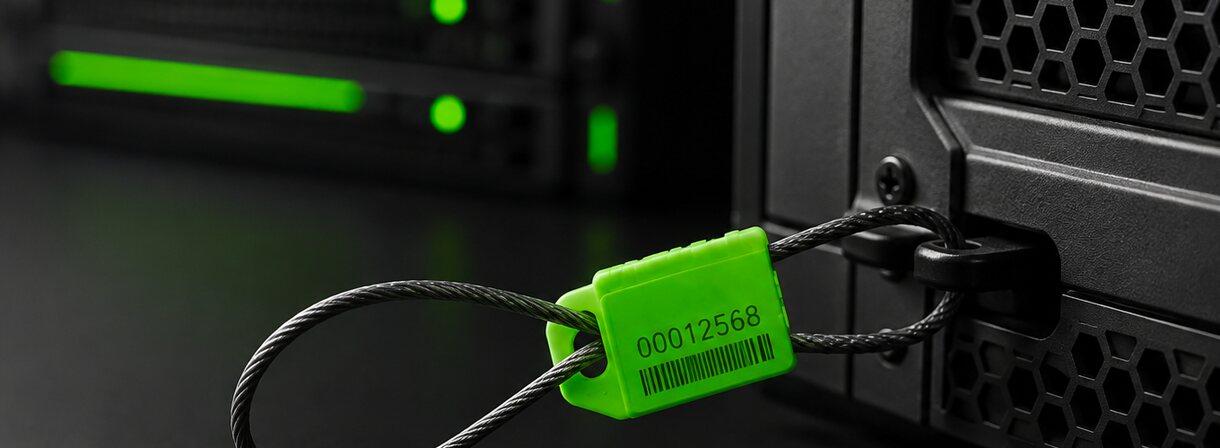
Clear procedures define how devices are identified, labelled, packaged and handed over.
-
Asset Identification & Registration
Serial numbers, asset descriptions and other relevant identifiers create a baseline inventory against which later actions can be reconciled.
-
Controlled Handovers & Responsibility Transfer
Relevant handovers are documented to show who released the asset, who received it and when the transfer occurred.
-
Secure Staging & Storage
Assets awaiting treatment are held within controlled areas with appropriate access restrictions
-
Transport Decisions & Secure Logistics
Where transport is necessary, documented security procedures help maintain accountability in transit.
-
Intervention Logging & Real-Time Documentation
Significant treatment steps are recorded during the operation, helping create a contemporaneous record rather than reconstructing events later.
5 security principles
-
1
Keep Data-Bearing Assets Under Controlled Responsibility
Assets should remain within clearly defined and documented processes. Relevant handovers should maintain clear responsibility and traceability.
-
2
Limit Unnecessary Transport of Untreated Sensitive Media
Reducing the movement of untreated data-bearing media helps reduce exposure. On-site treatment can remove the need to transport intact sensitive media.
-
3
Align Treatment Path with Asset Sensitivity
Not all assets require the same treatment. Depending on the sensitivity of the data and media type, the appropriate path may be certified data erasure or physical destruction.
-
4
Maintain Documented Records that Support Traceability
Collection, handover, treatment and verification should create records that show what happened, when and with what outcome.
-
5
Treat Security as an Ongoing Operational Workflow
Security begins at collection and continues through handling, treatment and final disposition. A certificate is the final proof point — not the beginning of the security process.
Three Layers of Security & Accountability
-
Operational
(Collection, Staging, Transport)
-
Documentation
(Handovers, Logs, Records)
-
Verification
(Certificates, Audit Trail)
Why this matters for your organisation
For IT teams, security officers, compliance managers, procurement teams and risk management functions, strong chain-of-custody controls directly reduce operational uncertainty and strengthen confidence in asset handling security.
-
IT & Asset Management Teams
Gain visibility into which devices have been collected, staged, treated and completed.
-
Security & Risk Management
Documented controls help reduce the risk of sensitive assets moving through uncontrolled channels.
-
Compliance & Data Protection
Chain-of-custody records support internal reviews, audits and data protection accountability.
-
Procurement & Vendor Management
Transparent and documented chain-of-custody procedures provide a clearer basis for vendor assessment.
-
Governance & Executive Stakeholders
Structured documentation demonstrates that sensitive asset disposal is being managed with appropriate control.
-
Large-Scale Programmes
For multi-location refreshes, data centre closures and decommissioning projects, chain of custody provides programme-level visibility.
Frequently asked questions
-
Chain of custody is preserved through controlled collection, on-site handling, defined procedures and documentation. Assets remain under accountable responsibility from intake through treatment completion and evidence.
-
Every transfer of untreated media is an exposure point. Destroying assets at your premises removes transport and external staging from the chain, and lets your team witness the operation.
-
Serial-number reconciliation at each handover reveals any discrepancy immediately. It is investigated, documented and reported to you, so the gap is never hidden in the final records.
-
Each asset is registered at intake and followed to its final disposition, with certificates and records you can review. With on-site destruction, you can also witness the treatment yourself.
Next steps
Explore related compliance frameworks:
- Traceability & Certificates Documentation Layer (how records and certificates support accountability)
- ISO 21964 & DIN 66399 Destruction Standards (technical standards underlying secure treatment)
- GDPR & nLPD Data Protection (regulatory requirements for secure handling and accountability)
- Our Certifications Trust Signals (ISO 9001 quality management, NIST SP 800-88, operational credentials)

Or reach out to our team: